
Why So Many Bridgerton Fans Relate to Eloise Bridgerton: Independence, Trauma Responses, and the Fear of Losing Yourself
If you’ve watched Bridgerton, you probably have strong opinions about Eloise Bridgerton.
She’s curious, outspoken, and constantly questioning the expectations placed around her. While others embrace the social script of marriage and status, Eloise challenges it. She asks questions others seem content not to ask.
Why does life have to look like this?
Who decided these rules?
Why should she follow a path she didn’t choose?
Her perspective is refreshing.
But as the story unfolds, something else becomes clear.
The more Eloise questions the world around her, the more she begins to stand apart from it.
And sometimes that distance starts to feel lonely.
Why So Many Bridgerton Fans Relate to Eloise Bridgerton
There’s a reason so many fans of Bridgerton feel drawn to Eloise Bridgerton.
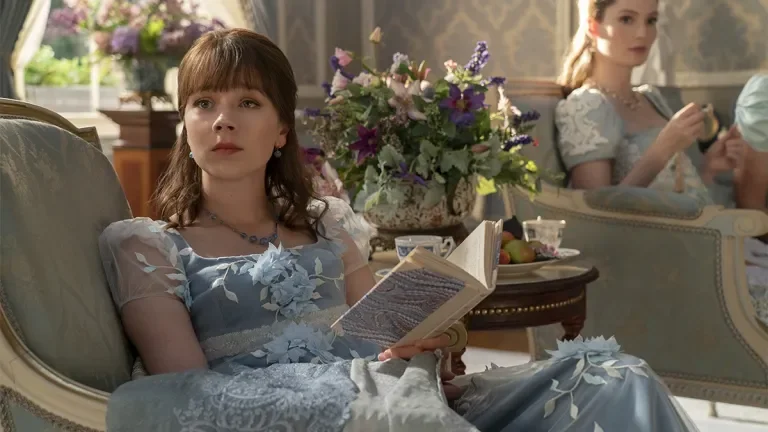
She represents something many thoughtful, self-aware people recognize in themselves.
She notices things others ignore.
She questions expectations others accept.
She refuses to lose herself just to fit in.
For people who have spent much of their lives thinking deeply, pushing back against norms, or feeling slightly outside the roles expected of them, Eloise feels familiar.
But there’s another layer to her character that many viewers also recognize.
Her independence isn’t just confidence.
It’s protection.
When Closeness Feels Like Losing Yourself
One of the most interesting things about Eloise is how fiercely she protects her independence.
She watches the women around her enter marriages that appear to reshape who they are. Their lives become smaller. Their voices quieter. Their identities defined by expectations.
To Eloise, closeness doesn’t just look like connection.
It looks like risk.
Risk of losing her voice.
Risk of losing her freedom.
Risk of becoming someone she never intended to be.
So instead of leaning into connection, she often pulls back.
Not because she doesn’t care about people.
But because protecting her identity feels safer than risking it.
Why Some People Push Others Away
This dynamic shows up in real life more often than people realize.
For people who value independence deeply — especially those who learned early in life that they had to rely on themselves — closeness can feel complicated.
Part of them wants connection.
Another part quietly wonders:
Will I lose myself in this relationship?
Will I have to shrink parts of who I am?
Will someone else’s expectations take over my life?
Those fears rarely show up as obvious fear.
Instead, they show up as subtle distance.
Keeping conversations intellectual instead of personal.
Deflecting vulnerability with humor or logic.
Pulling back when relationships start to deepen.
From the outside, it can look like someone who simply prefers independence.
But underneath, it can be something more protective.
Why High Achievers Sometimes Develop Hyper-Independence (A Trauma Response)
Many people who resonate with Eloise Bridgerton are also people who learned to become highly capable early in life.
They became the one who:
handled things on their own
stayed responsible and dependable
solved problems for everyone else
kept pushing forward no matter how stressed they felt
From the outside, this looks like strength.
But sometimes it develops as a trauma response called hyper-independence.
Hyper-independence can develop when someone learns that relying on others isn’t always safe or predictable.
So the nervous system adapts.
It learns:
Handle things yourself.
Stay capable.
Stay in control.
Don’t rely too much on anyone else.
Over time, this strategy creates adults who appear incredibly competent and successful.
But the same strategy that once helped someone feel safe can also make relationships feel complicated later.
Letting people get close can trigger fears like:
losing independence
losing control
becoming responsible for someone else’s needs
or losing parts of yourself
So even when someone wants connection, their nervous system may still be trying to protect them.
The Paradox of Independence and Connection
This is the quiet tension many thoughtful, high-functioning people experience.
They don’t want to lose themselves in relationships.
But they also don’t want to feel alone.
Characters like Eloise Bridgerton resonate with so many viewers because she embodies this tension.
Her independence is a strength.
Her curiosity is a strength.
But the story also hints at something deeper: questioning everything can sometimes leave you feeling like you’re standing slightly outside the world around you.
Connection Doesn’t Have to Mean Losing Yourself
One of the most important things people eventually discover is this:
Healthy connection doesn’t require you to disappear.
It doesn’t require shrinking your independence, your curiosity, or your voice.
The right relationships allow you to be fully yourself and still be close to someone else.
You don’t have to choose between independence and connection.
Both can exist at the same time.
If You Recognize Yourself in This Pattern
If you’ve ever felt like the person who questions everything…
The one who notices what others miss…
The one who values independence deeply but sometimes struggles to let people get too close…
You’re not alone.
For many people, this pattern isn’t a personality flaw.
It’s often a protective response the nervous system learned earlier in life.
And once these patterns are understood, they can begin to shift.
Trauma-Informed Therapy for Hyper-Independence and Stress Patterns
In my practice, I work with thoughtful, high-functioning adults who are used to holding everything together on their own but want to better understand the deeper patterns behind their stress, independence, and relationship dynamics.
My work focuses on trauma-informed therapy and Eye Movement Desensitization and Reprocessing, which can help people understand how past experiences shape current emotional and relational patterns.
If you’d like to learn more about trauma responses, nervous system patterns, and EMDR therapy, you can explore more here:
Ready to Talk?
Sometimes the first step isn’t fixing anything.
It’s simply having a space where you don’t have to hold everything alone.
If you’re interested in exploring therapy, you’re welcome to schedule a free consultation call to see if working together might be a good fit.
About the Author
Meghan Hanes, LCSW, is a trauma and substance use therapist providing virtual therapy in Oregon. Using EMDR and trauma-informed approaches, she helps high-functioning adults understand the “why” behind their coping patterns and find healthier ways to regulate stress.
